
Safety Comes First
Nine safety practices that shape every route, every stop and every hand-off.
Monitoring Throughout Travel
Eyes on every pet, every leg of the trip.
Frequent Health Checks
Appetite, energy and comfort checked at each stop.
Comfort Stops
Regular breaks for stretching, walking and resting.
Hydration
Fresh water offered often, never rationed.
Temperature Control
Climate kept steady and comfortable at all times.
Stress Reduction
Calm voices, familiar blankets and unhurried handling.
Safe Handling
Secure leashing and careful loading on every transfer.
Emergency Preparation
First-aid supplies and route veterinary contacts ready.
Professional Supervision
Experienced handlers, never left unattended.
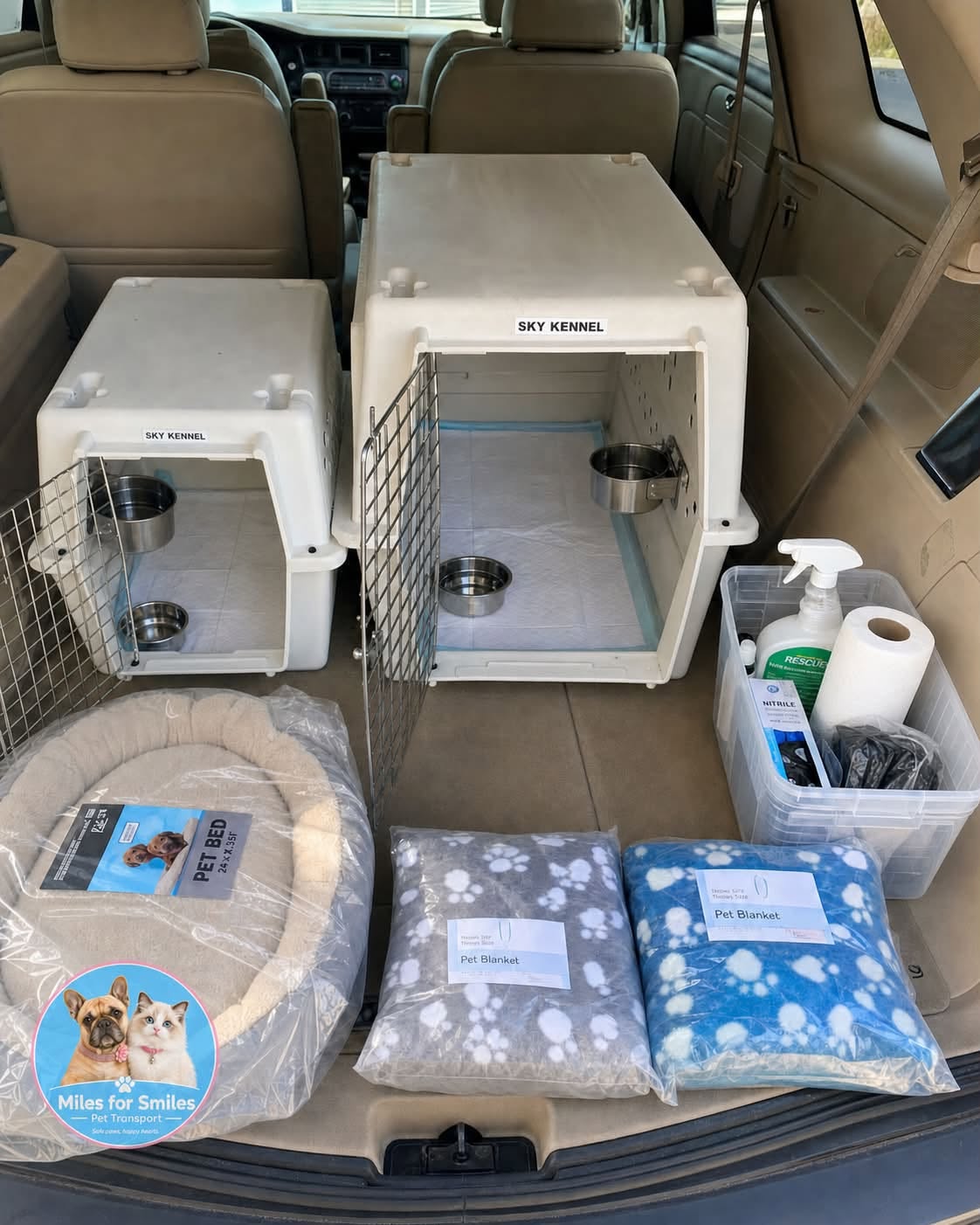
Every Journey Starts Clean
Long before a single mile is driven, the van is prepared. Crates are sanitized and checked, bedding is fresh, absorbent pads are new, water is filled, and every strap and latch is inspected. Nothing is packed in a hurry and nothing is reused without cleaning.
By the time we knock on your door, everything is already organized, quiet and ready for your pet to settle in.
Every trip starts with a clean, fresh setup because your pet deserves nothing less.
Pre-departure checklist
- USDA Approved Crates
- Fresh Water
- Clean Bedding
- Sanitized Equipment
- Safety Inspection
- Organized Vehicle
Traveling Safely with Puppies
Puppies are not simply small dogs. Their bodies cannot store much energy, and a few missed meals or hours of stress can drop their blood sugar dangerously low. That condition is called hypoglycemia, and it can escalate quickly on the road if nobody is watching for it.
Signs of Hypoglycemia
- Sudden lethargy or weakness
- Wobbly, uncoordinated walking
- Pale gums
- Shivering or trembling
- Refusing food
- Disorientation or, in severe cases, seizures
How We Prevent It
- Small, frequent meals on a strict schedule
- Warmth — blankets and controlled cabin temperature
- Constant monitoring of energy, gums and appetite
- Emergency supplies including glucose support on board
- Professional supervision at every stop, day and night
- Veterinary contacts mapped along the route
Helpful Pet Travel Tips
A little preparation makes a big difference in how your pet settles in.
The 3-3-3 Rule
- 3 Days — decompression. Your pet may hide, sleep a lot or eat lightly. That is normal.
- 3 Weeks — settling in. They learn the routine, test boundaries and start to relax.
- 3 Months — feeling at home. Trust is built and their true personality comes out.
Choosing the Right Transporter
- Are they USDA Licensed?
- Do they offer true door-to-door service?
- Will you receive real-time updates?
- Do they have medication experience?
- Do they have positive, specific reviews?
Preparing Your Pet for Travel
- Food your pet already eats, portioned and labeled
- Water bowl and any familiar feeding routine
- Comfort items and a favorite blanket
- Medication with written instructions
- Vet records and vaccination paperwork
Ready to Give Your Pet a Safe Journey?
From pickup to delivery, every mile is driven with love, patience and professional care.